
Want to help spread the word? Every post, story, and share helps more individuals living with brain injury and their loved ones find connection and support.
Download our Fundraising Toolkit for ways to get involved and simple steps to help raise awareness in your community.
Together, we can show that hope truly survives.


2026 Year-End Fundraiser
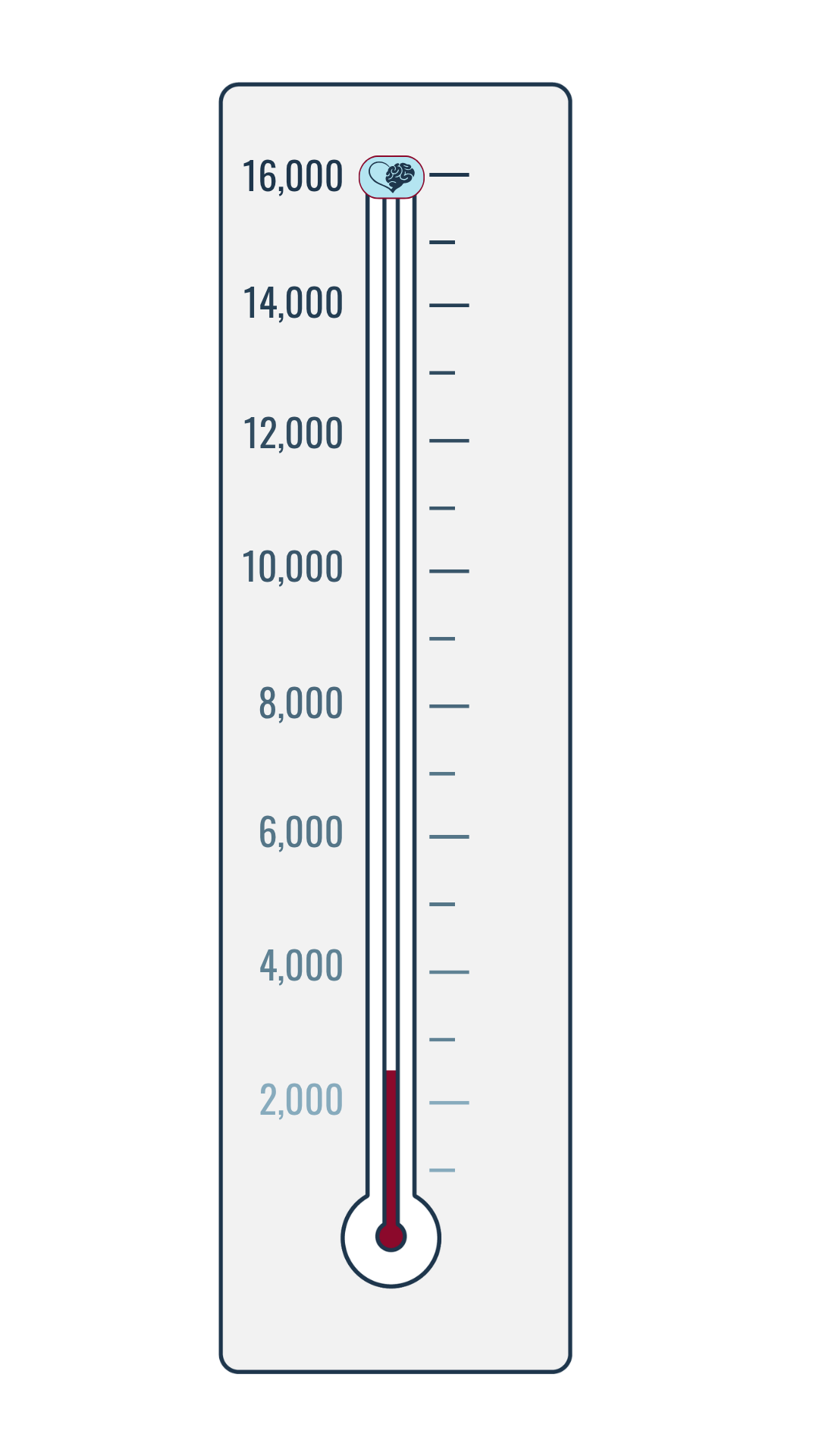
Our year-end goal is to raise $16,000 to help keep support, trusted resources, and meaningful connection within reach for people and families navigating brain injury.
Every gift helps sustain this work.
Questions about giving? Read our FAQs.

Why We Choose Hope
The relief of
being understood
The need for connection can continue long after a brain injury. For Bryan and Lisa, Hope Survives offered somewhere to turn - and people who understood.
Bryan attended Found Connection, one of our support groups, and he described what finding that community meant:
“I'm crying, but it's out of joy and not pain. I finally found a group that knows what happens after brain injuries.”
Lisa, who attended Hope After Head Injury, put it simply:
“Hope Survives has been a lifeline for me.”
A suggested gift of $55 helps sustain support groups and the wider work that keeps connection within reach.

At least 64 million adults report experiencing one or more traumatic brain injuries in their lifetime.*
Behind every number is a story.
A family adjusting.
A person rebuilding.
A community learning how to support differently.
Awareness reduces isolation.
Connection strengthens recovery.

Ways to Participate
Practical Ways to Help Fundraise: Download Your Toolkit!
Your toolkit is your one-stop guide for everything happening for this fundraiser!
Share the fundraiser and Make a connection!
Send this page to someone who may care about accessible brain injury support. Introduce Hope Survives to a workplace, church, or community organization that may want to help.
A short note in your own words is enough. Your voice can help someone feel less alone.
Wear Hope & Spark Conversation through Awareness Gear!
Check out the Hope Survives Store designs!
Including: messages rooted in lived experience, apparel that invites dialogue,
and a way to show support publicly and spark conversations!
100% of profits support our work with the brain injury community.

Why We Choose Hope
A Clearer Place to Begin
After her brain injury, Alison felt frightened by her symptoms and unsure where to begin. Listening was the least overwhelming way for her to learn, so finding information she could understand - and take in at her own pace - mattered.
The Hope Survives podcast offered education and a starting point.
In Alison’s words, it brought “light to a very dark and frightening time.”
That support remains meaningful to her today.
A gift of $300 helps sustain accessible education, lived-experience storytelling, and the wider work of Hope Survives.

Federal funding for TBI research in 2024 was $194 million - just $3.03 per person affected by TBI.**
The need is widespread.
Research and resources lag behind.
Awareness invites compassion. Compassion strengthens communities.
Share a Message.
Help someone find support.
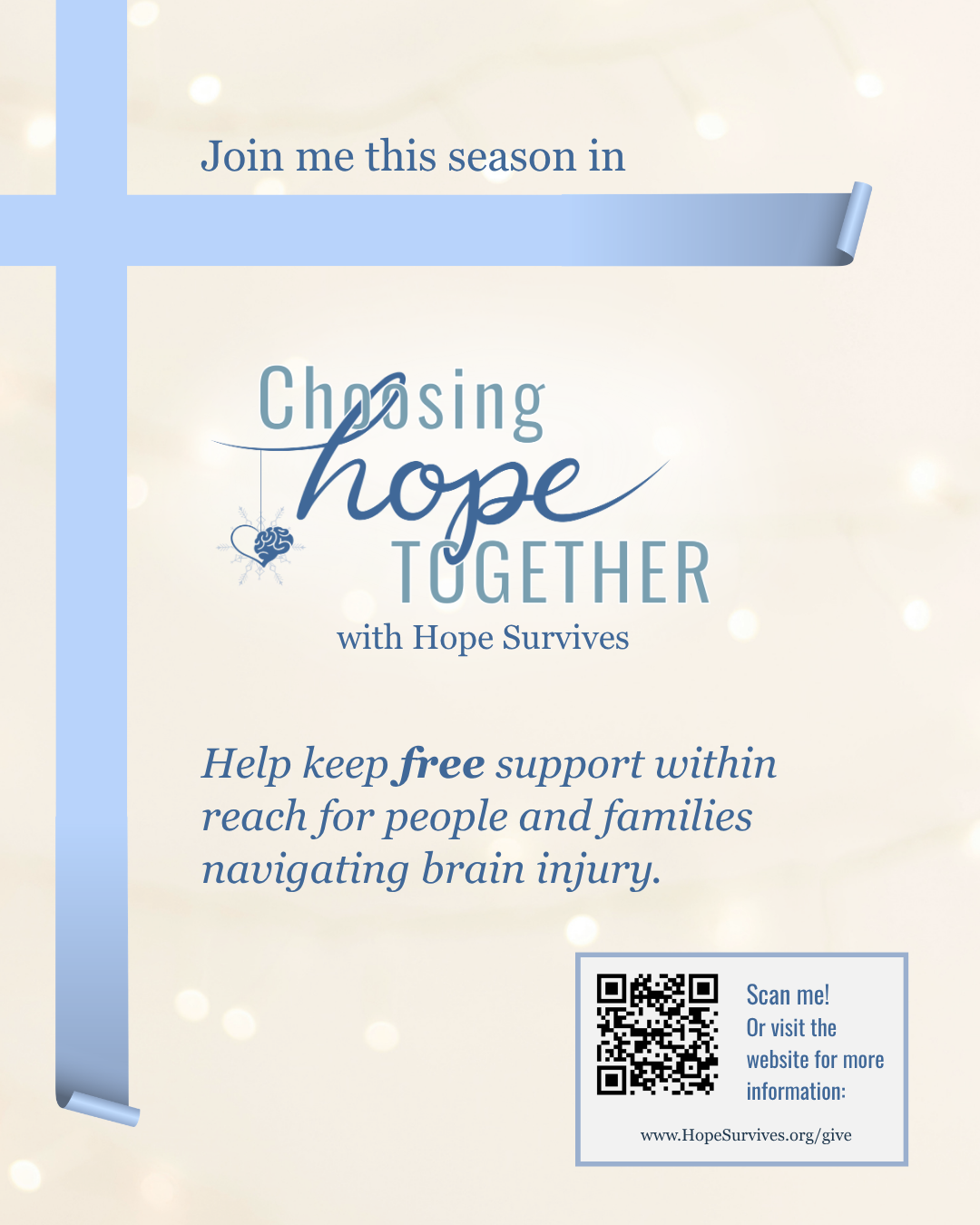
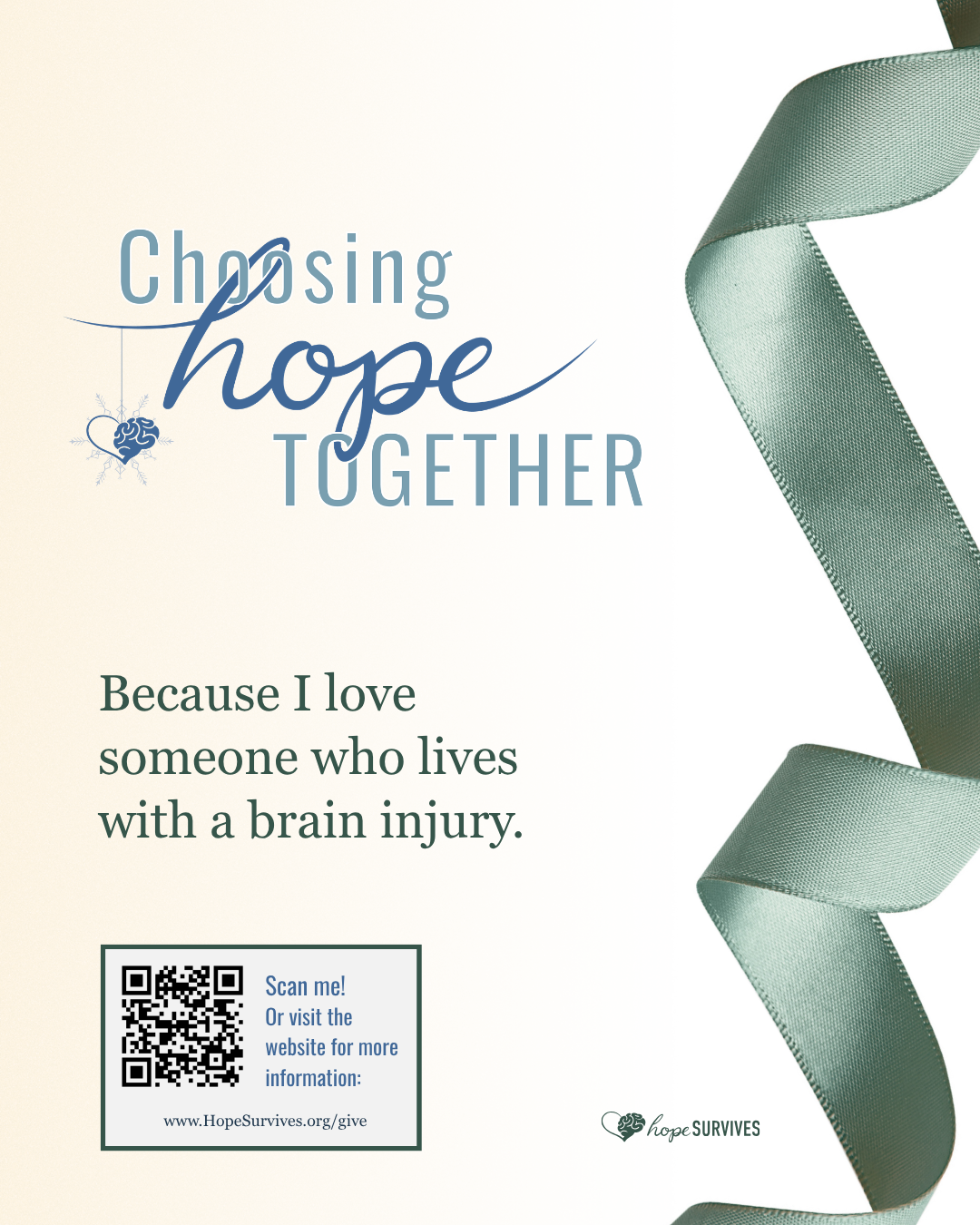
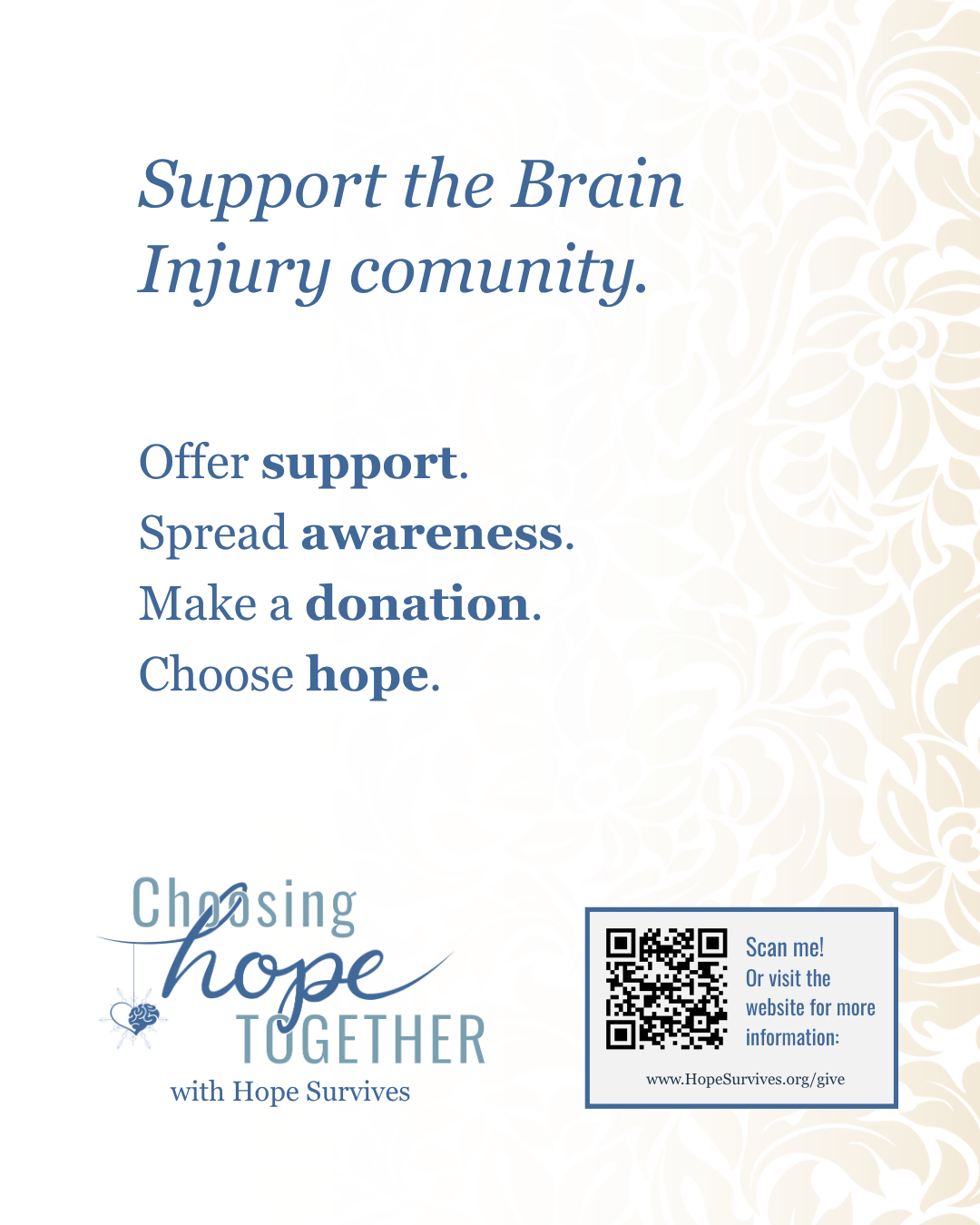
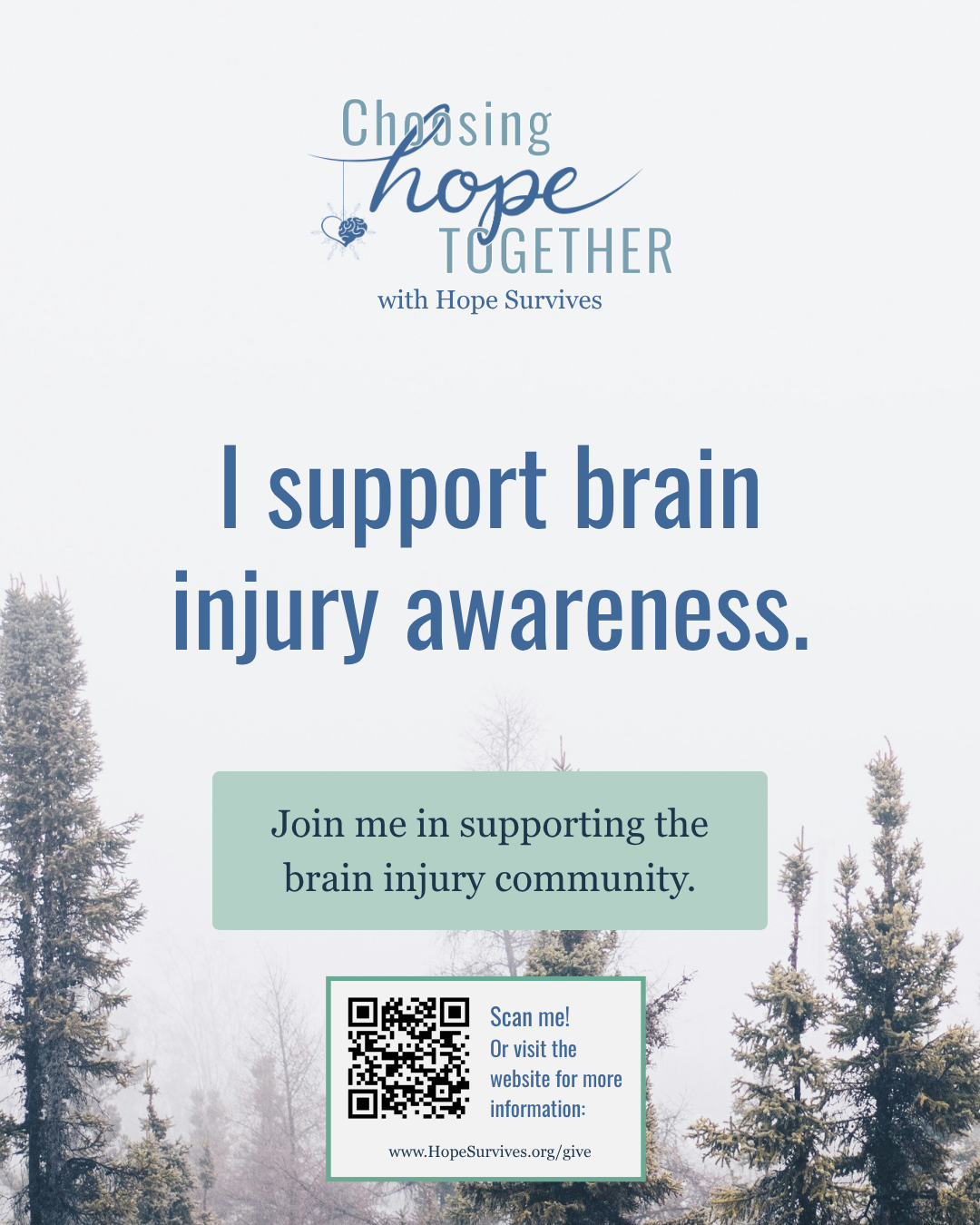
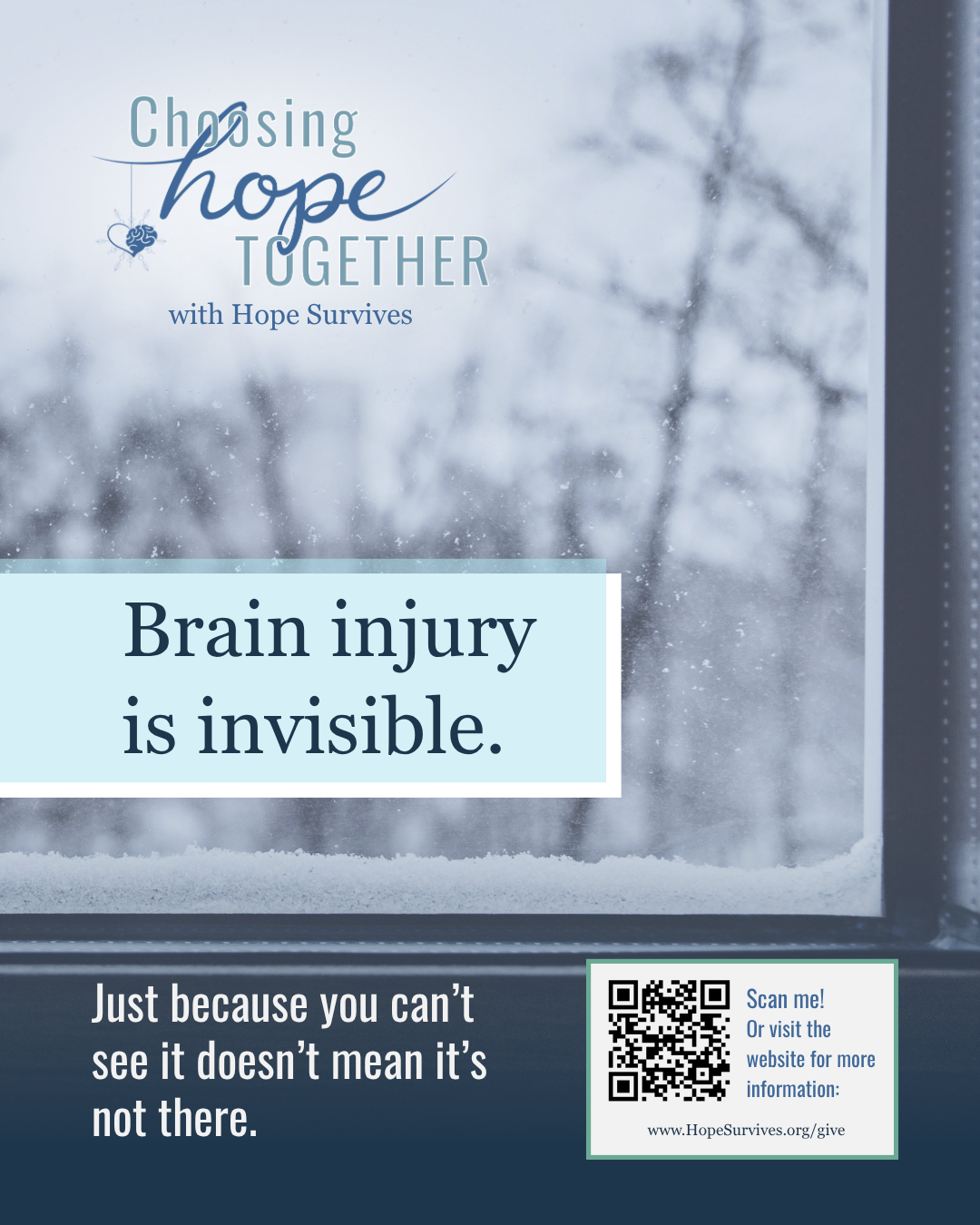
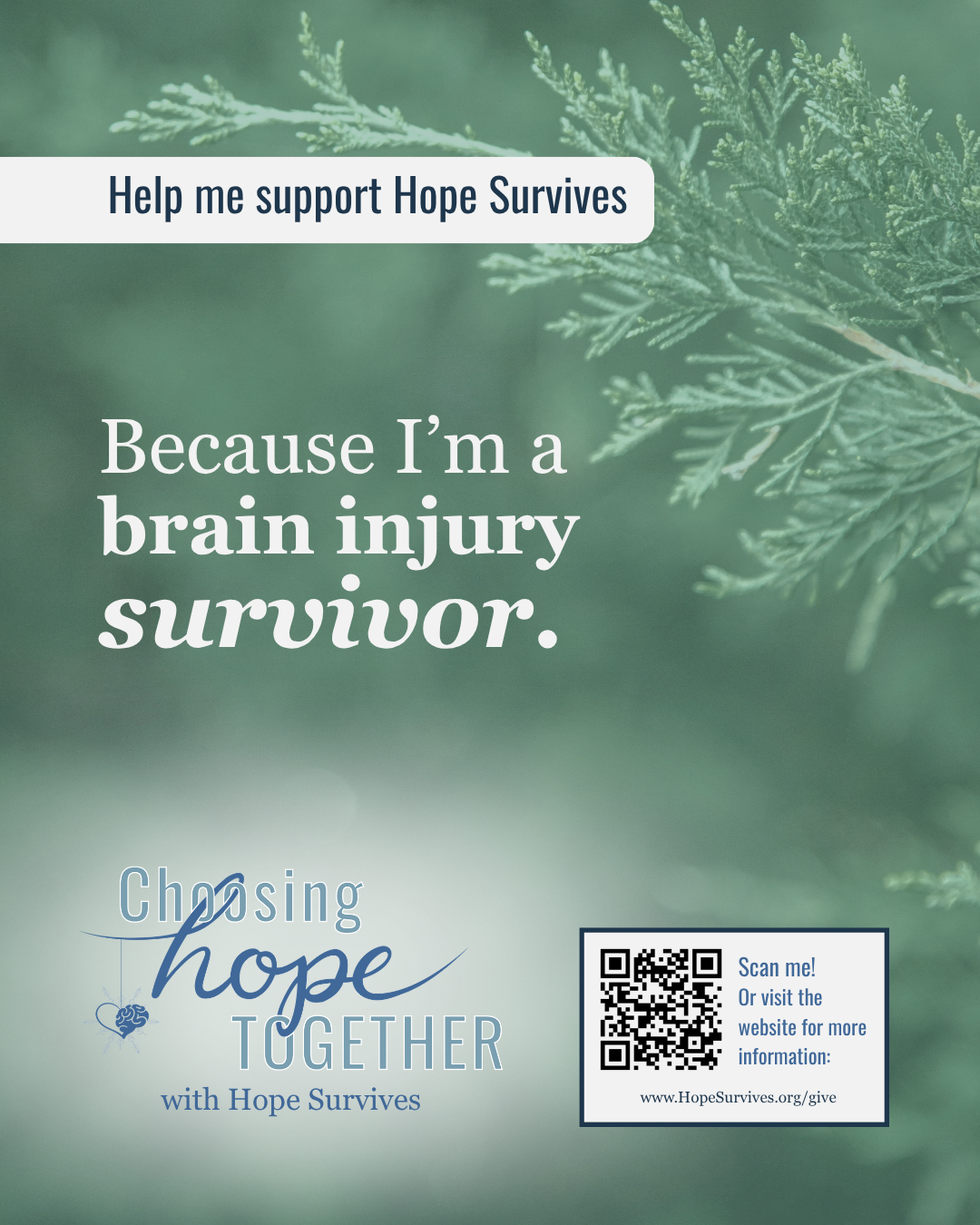
These messages are meant to be reposted, carried into everyday conversations, and shared with those who need them.
Choose a graphic below to download and share. You can add a few words about why this work matters to you, or simply share it with our campaign link:
Click any image to download - then share to bring awareness!

Why We Choose Hope
Connection at her own pace.
Kristen was navigating a year of unwanted changes related to her traumatic brain injury. Through Hope Survives’ Companion Program, she found a supportive small group and room to express herself.
“My group gave me support and space for me to express myself, and the group connection page lets me interact with others at my own pace. My small group was a wealth of knowledge and insight.”
Her experience reflects what opportunities for learning, creativity, and connection can mean in everyday life.
A gift of $2,000 helps sustain education, workshops, connection programs, and the wider work of Hope Survives.

A few helpful answers
-
Your gift supports Hope Survives’ mission, including free programs, resources, and community connection for people and families navigating brain injury.
It also helps support the work behind those offerings, such as preparation, coordination, and technology.
-
No. Our support and resources are available at no cost.
You do not need to donate, fundraise, or share your story to be part of this community.
-
Yes. Select the monthly option in the donation form to become a Hope Sustainer.
Monthly gifts provide ongoing support for Hope Survives’ work. Choose the amount and frequency that feel right for you.
-
No. Zeffy’s suggested platform contribution is optional.
Select “Other” and enter $0 if you prefer. Your donation to Hope Survives is not reduced by choosing this option.
-
No. You can create or share a fundraiser without making a personal donation.
You also do not need to disclose a diagnosis or personal experience. Share only what you feel comfortable sharing.
-
This fundraiser runs through December 31, 2026 though donations are accepted year-round.
-
For questions about giving, sharing, or setting up a fundraiser, email hi@hopesurvives.org.
If you’re looking for support for yourself or someone you care about, explore our community and free resources. We’re glad you found us.
-
Hope Survives is a designated Thrivent Choice Recipient - so if you are a Thrivent member, you can now give to Hope Survives directly through your Choice Dollars.
Ready to support our mission of helping the brain injury community?
* Daugherty J, Peterson A, Black L, Waltzman D. Summary of the Centers for Disease Control and Prevention’s Self-reported Traumatic Brain Injury Survey Efforts. J Head Trauma Rehabil. 2025 Jan-Feb 01;40(1):E1-E12. doi: 10.1097/HTR.0000000000000975. Epub 2024 Jul 22. PMID: 39038104; PMCID: PMC11693486. (https://pubmed.ncbi.nlm.nih.gov/39038104/)